Addressing Common Misconceptions About Gynecomastia Surgery
Gynecomastia surgery, also known as male breast...

Automated machines known as robots are engineered for a myriad of functions. Robotics encompasses activities such as welding, assembly, surveillance, rescue missions, and more. Various types of sensors are integrated into robot designs to fulfill specific operational needs, collectively referred to as robot sensors. These sensors are indispensable in robotics, rendering machines responsive and efficient, thereby mitigating uncertainty and enhancing productivity. Without sensors, robots lack perception and awareness. Hence, this article provides an overview of robot sensors, their classifications, and the wide array of applications they serve.
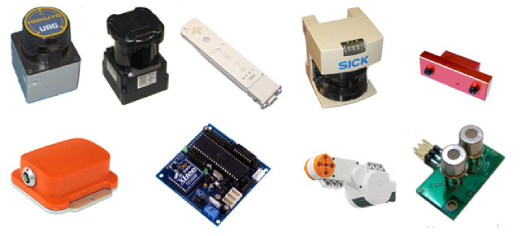
A robot sensor is a device utilized to gauge the state and surroundings of a robot. It relies predominantly on the functionalities of human sensory organs. Therefore, robots require a diverse array of information about their environment to operate effectively, including data related to position, distance, speed, dimensions, orientation, acceleration, pressure, temperature, torque, weight, brightness, and more.
A sensor integrated into a robot enables it to react to its surroundings, facilitating the execution of intricate tasks. Each robot necessitates distinct sensors to govern its actions by acquiring data concerning its position, bodily movements, and individual components.
The functionality of each sensor primarily hinges on the principle of transduction, which involves converting energy from one form to another. Sensors integrated into robots enable them to dynamically respond to their surroundings. By employing various sensors, robots can perceive and interpret their environment, enabling them to undertake diverse complex tasks.
Robot sensors assess the state and surroundings of robots, transmitting this information to the robot's controller in the form of electronic signals. Consequently, robots require a variety of sensors to regulate their actions effectively.
The attributes of robot sensors play a crucial role in selecting the appropriate sensor for various robotic scenarios. Below are some essential characteristics of robot sensors:
1. Accuracy
2. Dead Band & Hysteresis
3. Calibration
4. Repeatability
5. Resolution
6. Linearity
7. Drift
8. Temperature
9. Power
10. Usable Temperature
11. Output Form
12. Storage Temperature
13. Spot Size
14. Reliability
Robotic sensors come in various types, as outlined below.
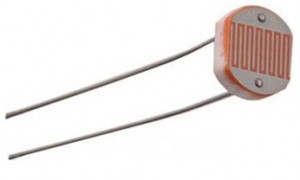
The photodetector is employed to detect light and produce a voltage variance. In robotics, light sensors come in two main types: photovoltaic cells and photoresistors. Photovoltaic cells convert solar radiation energy into electricity and are commonly utilized in the fabrication of solar-powered robots. On the other hand, photoresistors adjust their resistance based on light intensity; when exposed to more light, their resistance decreases. These light sensors are cost-effective, making them readily deployable in robotic systems.
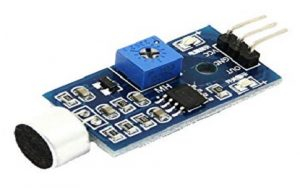
Acoustic sensors are primarily employed to perceive sound and convert it into an electrical signal. These sensors find application in robots for sound-based navigation. Utilizing such sensors, a robot can be designed to respond to auditory cues. For instance, a robot may be programmed to move to the right upon hearing a single clap and turn left upon detecting two claps.
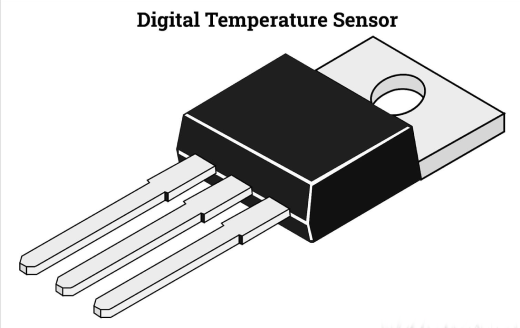
A thermal sensor serves to detect fluctuations in temperature within its environment. This sensor primarily operates on the principle of voltage variation in response to temperature changes, thus providing an accurate reading of the ambient temperature.
In robotics, these sensors are invaluable for functioning in extreme climatic conditions, whether in icy glaciers or scorching deserts. Various types of temperature sensor integrated circuits (ICs), such as LM34, TMP37, TMP35, TMP36, LM35, and others, are accessible for precise temperature detection.'
A touch sensor, also referred to as a contact sensor, finds application in robotics. Its primary role involves detecting alterations in velocity, position, acceleration, torque, or force at the joints of the manipulator and the end-effector. These sensors rely on physical contact to accurately perceive and respond to stimuli, ensuring precise robot operation. They are commonly integrated into various switches such as limit switches, button switches, and tactile bumper switches.
These sensors are extensively utilized in obstacle avoidance systems for robots. Upon detecting an obstacle, the sensor transmits a signal to the robot, prompting it to execute various tasks such as reversing, turning, or coming to a complete stop.
In robotics, a proximity sensor serves to detect objects near the robot and measure the distance between the robot and nearby objects without making physical contact. These sensors rely on magnetic fields to sense such objects, enabling non-contact detection. Proximity sensors are commonly available in two types: IR transceivers, photoresistors, and ultrasonic sensors.
Force sensors are employed to detect pressure, making them invaluable in robotics as they respond to touch, pressure, and force. These sensors are instrumental in designing robot hands to accurately determine the amount of grip and force required to grasp an object.
Positioning sensors, also referred to as navigation sensors, play a vital role in robotics by enabling robots to detect and determine their positions. Among the commonly utilized navigation sensors are GPS, Localization, and Compass systems.
The GPS (Global Positioning System) is particularly beneficial for outdoor robots as it utilizes maps received from GPS satellites to accurately analyze and determine the robot's location.
A localization sensor aids a robot in identifying external elements such as natural landmarks and artificial landmarks, processing their data to precisely determine its position.
The magnetic compass provides directional measurements using the Earth's magnetic field, guiding the robot in the correct direction to reach its destination. These sensors are considerably less expensive compared to GPS systems.
Inclinometers are employed to gauge acceleration and tilt. Two primary forces influencing the operation of an inclinometer are static and dynamic forces.
Static force, also known as friction between two objects, is utilized to ascertain the precision of a robot's tilt. Dynamic force, representing the amount of force necessary to move an object, is employed to calculate the required acceleration.
Gyroscope Sensor:
Angular Momentum Sensor
An angular momentum sensor, also known as a gyro or gyroscope sensor, is utilized to measure and assist in maintaining orientation based on the principle of angular momentum. It calculates the rate of rotation around a specific axis. This sensor proves invaluable when ensuring that a robot maintains its orientation without relying on Earth's gravity.

Gynecomastia surgery, also known as male breast...
iGaming businesses that make their first move in...
Maintaining optimal gum health is crucial for...
Listrik menjadi kebutuhan utama dalam kehidupan...
The era of the "ten blue links" is...
OccuMed Primary Care assists patients who need acute or immediate care. Depend on our Hammond primary care doctors for outstanding service and attention every step of the way.
The Disinfection Robots Market is projected to...
In the fast-paced world of technology, the role...
Dunpar Homes is a premier builder of luxury townhomes in Etobicoke Toronto. View available luxury homes Oakville, office space for sale in Etobicoke and Toronto and browse designs & more. Register today or call us +1 (416) 236-9800.
You will receive top Northwest Indiana chiropractor treatment and care for your pain from our doctors at Motus Integrative Care.






Please login to comment on this Post