Broadband Connection in Batlagundu | Sathya Fibernet
Stay Connected with Fast and Reliable Internet in...

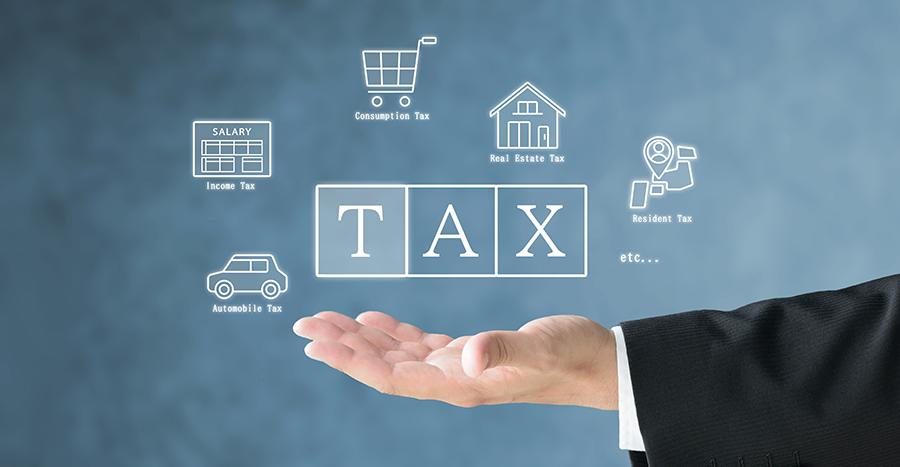
Switzerland has long been a magnet for international talent, offering stunning landscapes, high salaries, and an incredible standard of living. But if you are an expat settling in—whether in a quiet alpine village or a bustling financial hub—you quickly realize that the Swiss tax system is uniquely complex.
The year 2026 brings new updates, pension limits, and cross-border rules. Understanding Swiss tax rules isn't just about avoiding penalties; it is about keeping more of your hard-earned money.
With smart tax planning, you can legally minimize your liability, maximize your savings, and file with absolute confidence. This guide will step you through exactly what you need to know about taxes in Switzerland for foreigners, from basic withholding tax to specialized dual-filing requirements like US tax return preparation.
Taxes in Switzerland are deeply decentralized. Unlike countries with a single national tax rate, Switzerland taxes you at three distinct levels:
Federal Tax: This is standard across the entire country and is progressive, though capped at a relatively low maximum rate.
Cantonal Tax: Each of the 26 cantons sets its own tax laws and rates. Cantons like Zug and Schwyz are famous for their low tax burdens, while Geneva and Vaud tend to be higher.
Municipal (Communal) Tax: Your local town or city applies its own multiplier to the cantonal tax rate. This makes hyper-local planning incredibly important when choosing where to rent or buy.
Your tax residency generally begins the day you arrive in Switzerland with the intention of staying. If you hold a B or L permit, or if you reside in the country for at least 30 days while working, you are considered a Swiss tax resident. This tax in switzerland for foreigners status dictates how you are taxed and mandates that your worldwide income must be reported to Swiss authorities.
For most expats arriving in Switzerland on a B permit, taxes are handled automatically through a system called Quellensteuer.

Quellensteuer, or withholding tax, means your employer deducts your estimated income tax directly from your monthly paycheck and sends it to the cantonal tax office. This flat rate assumes a standard set of deductions for things like commuting, meals, and insurance. For many new arrivals, this makes the first few years of Swiss taxes delightfully easy—you simply don't have to file anything at all.
However, the simplicity of Quellensteuer doesn't apply to everyone. You are legally required to file a standard Swiss tax return (a subsequent ordinary assessment) if:
Your gross annual income exceeds CHF 120,000.
You obtain a C permit (permanent residency) or become a Swiss citizen.
You are married to a Swiss citizen or a C permit holder.
You have significant worldwide wealth or non-taxed income (like overseas rental income).
You can also voluntarily request to file a regular tax return if you have large actual expenses (like massive commuting costs or high childcare fees) that exceed the standard deductions baked into the Quellensteuer rate. Be warned: in most cantons, once you opt in voluntarily, you cannot go back to the simplified withholding system.
The Swiss government taxes you on your worldwide income and wealth. This implies that in case you have a rented property in London, a stock brokerage in New York, or a bank account in any foreign country, it should be declared. Although the Swiss government does not levy direct tax on foreign assets, their value determines the tax category of your Swiss income and wealth.
Nobody wants to pay tax twice on the same money. Fortunately, Switzerland has a robust network of Double Taxation Agreements (DTAs) with over 100 countries. These treaties ensure that taxes paid in one country can generally be credited against tax liabilities in the other.
For American expats, this is critical. US citizens must file a US tax return every year, noting their worldwide income regardless of where they live. By utilizing tools like the Foreign Earned Income Exclusion (FEIE)—which allows you to exclude up to $132,900 of foreign earned income for the 2026 tax year—and the Foreign Tax Credit (FTC), you can usually reduce your US tax bill to zero while remaining fully compliant.
Filing a regular tax return opens the door to numerous deductions that can significantly lower your taxable income.
Swiss health insurance premiums are notoriously high, but they offer a silver lining: basic premiums are generally deductible up to a cantonal cap.
Even better are the pension deductions. Contributing to the Swiss "Pillar 3a" (a private, tied pension account) is one of the most powerful tax-saving tools available. For 2026, employees with a standard pension fund can contribute and deduct a maximum of CHF 7,258 from their taxable income.
To see how deductions impact your bottom line, you can explore this calculator:

Please login to comment on this Post

Stay Connected with Fast and Reliable Internet in...
كلمات طاير بي غيث صباح غيرك...
مامصدك لالالالالا مستحيل...
Mitesh Rathi classes is the top coaching for IIT...
Managing airborne dust is a crucial aspect of...
Dive into the world of green hydrogen and its derivatives with Avaada. Learn about our sustainable green hydrogen ammonia solutions and their impact on a greener future.
"Mergers and Acquisitions Advisory" is...
Hammer Serna & Quinn, LLC offers trusted legal representation for divorce, custody, and family law. Contact our reliable Chicago divorce lawyers today. Visit us: https://www.hsqlawfirm.com/blog/
Sathya Fibernet: Trusted Broadband in Tuticorin...
Achieving and sustaining optimal health and...